Tartaria’s Forgotten World Fairs
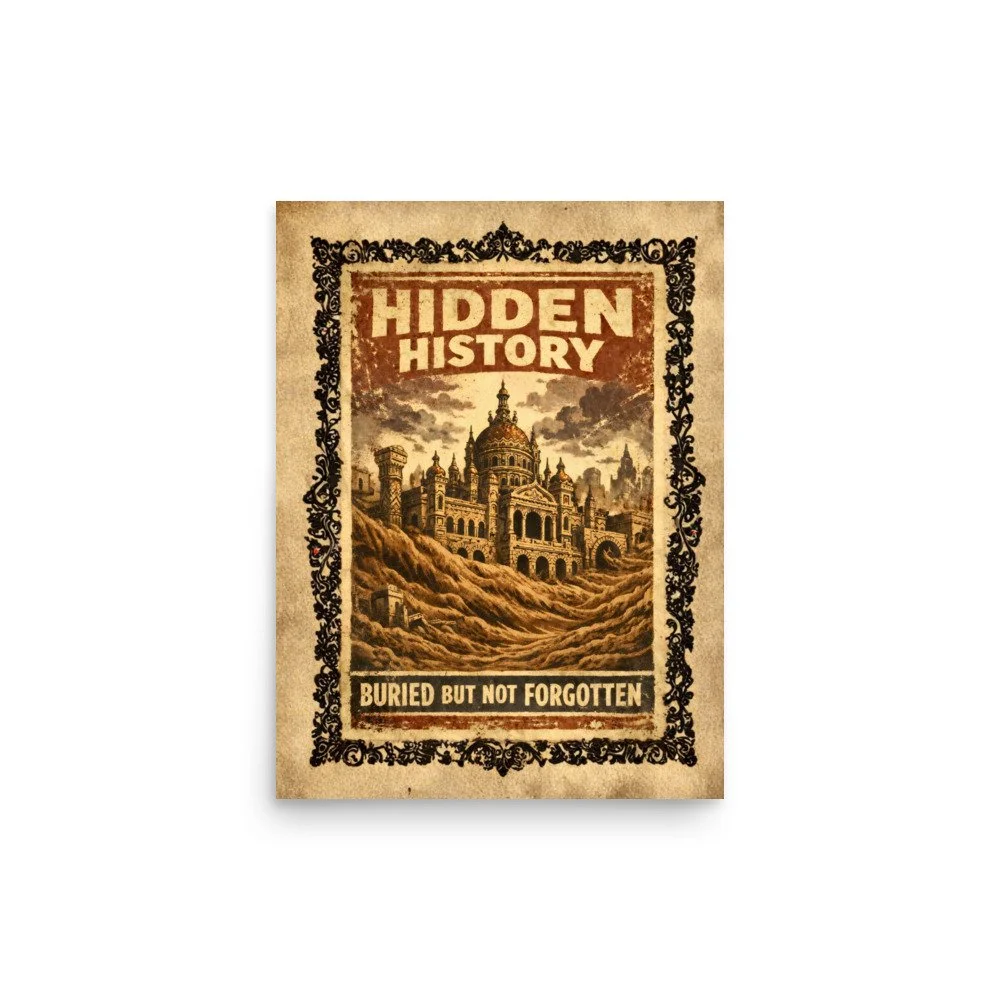
There is a peculiar feeling that arises when looking at photographs of the great world fairs of the nineteenth century. A sense of awe, certainly—but also unease. Vast palaces appear fully formed, their domes crowned with allegorical figures, their colonnades stretching endlessly toward the horizon. Cities of marble and glass seem to emerge overnight, only to vanish again within a few short years.
These exhibitions are often framed as temporary spectacles of industrial progress. Yet to many observers, they feel like something else entirely: echoes of a forgotten world, fragments of a civilization whose architectural language appears too refined, too monumental, too coherent to have been built merely as short-lived displays.
Within speculative history and mythic exploration, these structures are sometimes associated with Tartaria—not as a claim of fact, but as a symbolic framework through which to examine lost knowledge, erased aesthetics, and the fragility of cultural memory. Through this lens, the world fairs become portals: places where history, myth, and imagination converge.
Etherfolk approaches these world fairs not as proof, but as artifacts of possibility—architectural dreams rendered briefly visible before dissolving back into mist.
Beaux-Arts Marvels of the 19th Century
The dominant architectural language of the world fairs was Beaux-Arts: symmetrical, sculptural, and unapologetically grand. Drawing from classical Greek and Roman forms, Beaux-Arts architecture emphasized harmony, proportion, and ornamentation. It spoke a visual language of permanence—even when constructed from plaster, wood, and temporary steel.
At exhibitions like the World’s Columbian Exposition in Chicago (1893), entire cityscapes were assembled with astonishing speed. Visitors wandered through avenues lined with domes, triumphal arches, and palatial halls, many of them illuminated by newly harnessed electric light. The effect was immersive and overwhelming, as though stepping into an idealized civilization frozen in time.
From an Etherfolk perspective, these structures are compelling not because of how long they stood, but because of what they symbolized. They reflect a worldview in which architecture was not merely functional, but cosmological—a way of expressing humanity’s relationship to order, beauty, and the heavens above.
Domes, in particular, recur across world fair designs. Rising above exhibition halls, they echo ancient temples, cathedrals, and celestial observatories. Whether intentional or subconscious, these forms resonate with older cosmological models—visions of a world structured beneath a vaulted sky, governed by rhythm and harmony rather than chaos.
In speculative interpretations, such architecture is sometimes imagined as evidence of a forgotten synthesis: a civilization fluent in art, engineering, and cosmology, capable of shaping space in ways that modern cities rarely attempt. The world fairs, in this reading, are not novelties—but reappearances.
Speculative Histories and Cultural Memory
Speculative history occupies a delicate space. It is not concerned with proving what “really happened,” but with exploring why certain narratives endure, and others fade. Tartaria, as it appears in alternative histories and artistic explorations, functions less as a lost empire and more as a symbol of absence—a placeholder for what modern history does not fully explain.
World fairs fit naturally into this territory. Their documentation is fragmented: photographs without context, engravings without explanations, descriptions that emphasize novelty while glossing over labor, technique, or material sourcing. When entire architectural cities vanish shortly after their unveiling, questions naturally arise—not accusations, but curiosities.
Why were such elaborate forms considered disposable?
Why does modern architecture, with all its technological advancements, so rarely aspire to similar beauty or coherence?
What cultural shift made ornament, myth, and symbolism seem unnecessary—or even suspect?
Cultural memory is shaped as much by forgetting as by remembering. The demolition of the world fair palaces mirrors a broader pattern: the gradual erosion of symbolic architecture in favor of efficiency. What remains are images—ghostly, half-remembered—inviting interpretation.
Etherfolk engages these images as mythic artifacts. We do not claim that Tartaria built the world fairs. Instead, we ask what the idea of Tartaria reveals about our longing for depth, continuity, and meaning in the built environment. In this way, speculative history becomes a mirror: reflecting not the past as it was, but the present as it feels.
Architecture as Mythic Language
Architecture has always been a form of storytelling. Long before written language, civilizations encoded values, cosmologies, and social order into stone. Temples aligned with solstices. Cathedrals reached upward, drawing the eye—and the spirit—toward the heavens. Cities themselves became maps of meaning.
The world fairs revived this tradition, if only briefly. Their avenues were processional. Their statues allegorical. Their layouts deliberate and symbolic. Visitors did not simply consume information; they moved through a narrative, one structured by space and form.
Within Etherfolk’s visual language, this mythic quality is central. Tartarian-inspired motifs, world fair silhouettes, and domed horizons are not historical claims—they are aesthetic invocations. They invite the viewer to slow down, to sense rather than conclude, to remain in dialogue with the unknown.
In this way, architecture becomes a bridge between history and imagination. The world fairs remind us that cities can be beautiful without being permanent, and that meaning does not require endurance to be real.
The Etherfolk Perspective
Etherfolk exists at the intersection of mist, myth, and map. We are drawn to moments where history feels incomplete—not to fill the gaps with certainty, but to honor them with curiosity. Tartaria, world fairs, and speculative cosmology are not destinations; they are thresholds.
By revisiting the forgotten world fairs through a mythic lens, we reconnect with an architectural sensibility that valued harmony, symbolism, and wonder. We also confront a modern tension: the loss of shared myths capable of shaping our environments.
The Tartarian artifacts we create are offerings to that tension. They do not ask the viewer to believe, only to remember differently.
In the end, Tartaria’s forgotten world fairs are not about what was lost, but about what still stirs when we encounter beauty without explanation. They stand as reminders that history is not a closed book—and that imagination remains one of our most powerful tools for making sense of what endures.