Ancestral Architecture, Reclaimed Memory, and the Language of Forgotten Civilizations
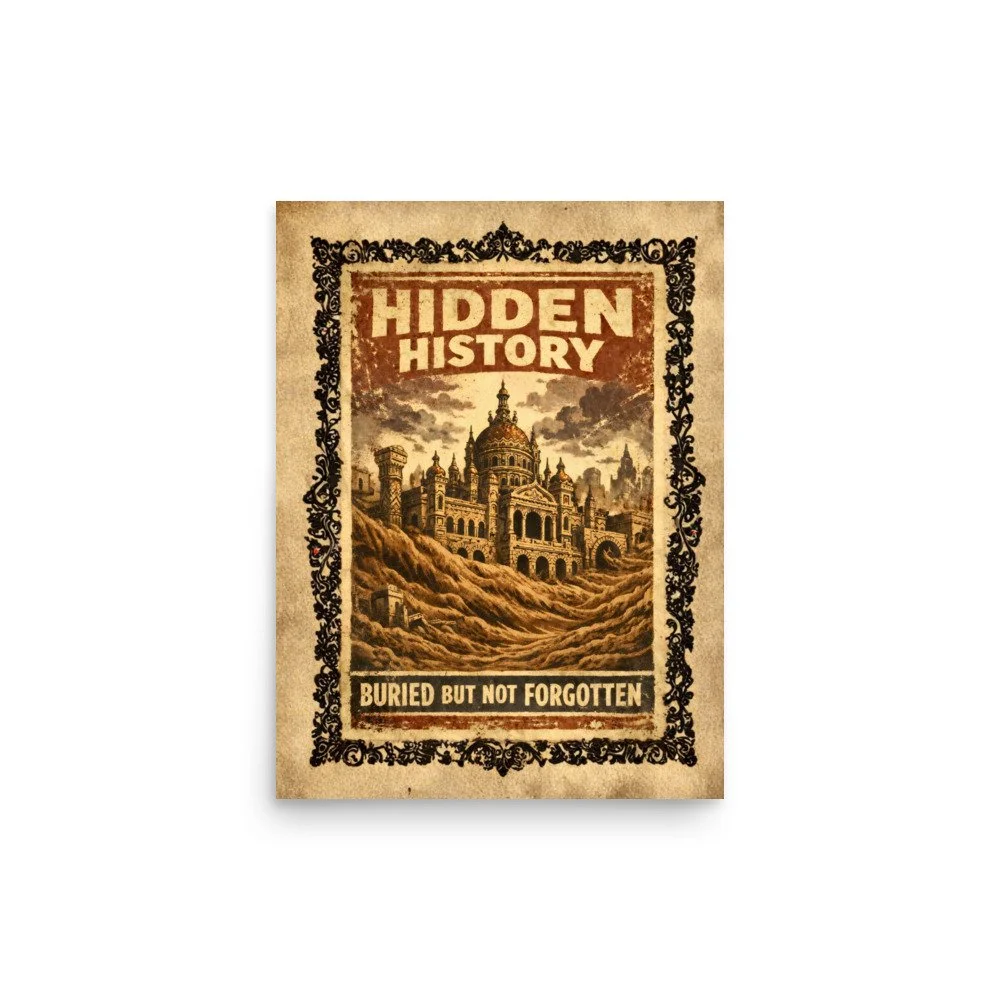
The official story asks us to believe that entire cities of monumental architecture—cathedrals without churches, palaces without kings, domes without purpose—were built only to be dismantled months later. Marble facades, colossal statuary, advanced electrical systems, and perfectly harmonized city planning, all supposedly erected for temporary exhibitions.
Yet when you slow your gaze and study the details, the story begins to fracture.
The World Fairs of the nineteenth and early twentieth centuries do not feel temporary. They feel inherited.
To the Etherfolk eye, these exhibitions resemble something else entirely: a revealing, not a construction. A moment when remnants of an older, highly advanced civilization—often referred to as Tartaria—were unveiled, reframed, and gradually erased beneath a new historical narrative.
Modern mythic design does not invent this aesthetic. It remembers it.
The Problem With “Temporary” Grandeur
Across cities like Chicago, Paris, St. Louis, San Francisco, and London, world fairs emerged with impossible speed. The buildings shared striking consistencies across continents:
Beaux-Arts symmetry and celestial geometry
Massive domes aligned with cardinal directions
Sculptural reliefs depicting mythic, allegorical, and cosmic themes
Integrated waterways, canals, and power systems
Scale that dwarfed surrounding urban infrastructure
We are told these structures were built from plaster and staff, meant to last mere months. Yet archival photographs show stone foundations, subterranean levels, and architectural detailing inconsistent with temporary materials.
The alternative possibility—one that Etherfolk takes seriously—is that these cities already existed.
That the fairs served as rebranding events: a way to repurpose inherited architecture while severing it from its original cultural and cosmological context.
Architecture as Cosmology Made Visible
If Tartaria existed as a global civilization, its architecture was not ornamental. It was functional, symbolic, and cosmological.
Domes were not stylistic flourishes. They were instruments.
Many structures appear aligned with celestial movements—solar paths, equinoxes, and lunar cycles—suggesting a worldview in which architecture mirrored the heavens. This aligns seamlessly with flat earth cosmology, where the sky functions as a clock, not an infinite void.
World fair grounds often centered on:
A dominant dome or tower
Radial city layouts
Water features reflecting light and sky
Elevated platforms suggesting ritual or observational use
Rather than entertainment venues, these spaces resemble ceremonial or energetic centers, later reframed as spectacles once their original function was no longer acknowledged.
Modern mythic design borrows from this language instinctively—because it resonates on a level deeper than style.
Why Modern Design Keeps Returning to World Fair Aesthetics
Artists, architects, and designers today are drawn repeatedly to world fair imagery without always knowing why. The pull is ancestral.
You see it in:
Neo-classical revival architecture
Dome-centered civic buildings
Symmetrical, axial layouts in concept art and speculative worlds
Fashion and merchandise featuring celestial maps and antique iconography
These designs feel timeless because they originate outside the modern historical timeline. They don’t signal nostalgia—they signal recognition.
Etherfolk artifacts consciously draw from this lineage. Not as decoration, but as reclamation.
Tartaria and the Aesthetic of Coherence
One of the most striking qualities of world fair cities is coherence. Nothing feels accidental.
Buildings speak to each other. Statues echo shared symbolism. The layout suggests a unified worldview rather than competing interests. This coherence is rare in modern construction, where profit and zoning override harmony.
A Tartarian civilization—if global, advanced, and cosmologically oriented—would prioritize:
Sacred geometry
Alignment with natural forces
Beauty as a functional necessity
Architecture as a living system
This worldview explains why world fair cities feel complete even in fragments. They were not prototypes. They were remnants.
From Erasure to Aesthetic Revival
After the fairs closed, many of these structures were demolished, burned, or quietly repurposed. Others still stand today, stripped of their original meaning and renamed as museums, government buildings, or monuments.
This pattern mirrors a broader phenomenon:
erase the past, keep the shell.
Modern mythic design becomes a form of resistance to this erasure. By reviving Tartarian aesthetics, artists challenge the idea that history is settled or linear.
Etherfolk artifacts exist within this resistance.
Design as Inquiry, Not Decoration
When Etherfolk creates embroidered maps, prints, or wearable artifacts, the goal is not nostalgia. It is inquiry.
Each piece asks:
Why do these symbols recur across cultures?
Why do domes appear everywhere, across unrelated timelines?
Why does the official narrative require such massive amnesia?
Design becomes a way to hold unanswered questions without resolving them prematurely.
This is not about replacing one dogma with another. It is about reopening the archive.
The World Fair as Threshold Event
Rather than exhibitions of progress, the world fairs may represent threshold moments—a transitional period where an older civilization’s infrastructure was absorbed into a new order.
Electricity demonstrations, “new” transportation systems, and technological marvels were showcased against a backdrop of architecture that already understood energy, resonance, and scale.
Seen this way, the fairs were not introductions. They were translations.
Modern mythic design translates again—this time back toward memory.
Why This Matters Now
Interest in Tartaria, flat earth cosmology, and suppressed history is not random. It arises during periods of narrative instability.
As trust in institutional storytelling weakens, people turn to form, symbol, and pattern for truth. Architecture becomes evidence. Art becomes archive.
Etherfolk exists at this intersection:
between artifact and question, beauty and doubt, memory and myth.
World fair architecture continues to inspire because it belongs to a world that was never meant to be forgotten.
Reclaiming the Inheritance
To wear, display, or collect Tartarian-inspired design is not to cosplay the past. It is to acknowledge that history may be incomplete—and that beauty often survives its erasure.
Modern mythic design does not invent a lost world.
It listens for its echo.