Artifacts of the Etherfolk: Embroidered Maps, Prints & Beyond
Artifacts are not simply objects. They are vessels of memory, carriers of meaning shaped by the hands that create them and the stories that surround them. Long before mass production, objects were made slowly, deliberately, and often symbolically. A map was not only a tool for navigation, but a worldview rendered visible. A textile was not decoration alone, but a record of lineage, ritual, and time.
Etherfolk draws from this older relationship to material culture. Our artifacts are not designed to explain or persuade, but to hold myth—to invite touch, contemplation, and a quieter kind of knowing. Embroidered maps, printed cosmologies, and symbolic designs serve as modern relics of speculative worlds, echoing forgotten histories and imagined geographies.
In this way, Etherfolk artifacts exist somewhere between artwork and talisman: grounded in craft, oriented toward myth, and open to interpretation.
Handmade Speculative Cartography
Maps are among humanity’s most revealing artifacts. They show not only where people believed they were, but how they understood reality itself. Ancient and medieval maps often blend geography with cosmology, theology, and myth. Oceans are bordered by beasts. Winds have faces. The heavens curve above the land.
Etherfolk’s embroidered maps stand in conversation with this tradition of expressive cartography. They are not replicas of historical charts, nor technical schematics meant to resolve debate. Instead, they explore mapping as an art form—one that privileges symbolism, orientation, and aesthetic resonance over precision.
Embroidery is central to this practice. Unlike printed images, embroidery introduces time into the object. Each stitch carries a rhythm. Each line is the result of repetition and patience. This slowness mirrors the contemplative nature of mythic exploration itself.
In speculative flat earth and dome cosmology imagery, the map becomes a meditation. The edge of the world suggests mystery rather than limitation. The center becomes a place of presence rather than dominance. The sky is implied, not measured—felt as a canopy rather than calculated as distance.
These maps do not seek to instruct the viewer where they are, but to ask how they relate to space, boundary, and horizon. They function as visual prompts—quiet invitations to remember that mapping was once as much about meaning as movement.
Prints as Modern Relics
Printed artifacts extend this philosophy into another medium. Where embroidery emphasizes touch and labor, prints allow for repetition without dilution—the same image appearing in many places, yet retaining its symbolic charge.
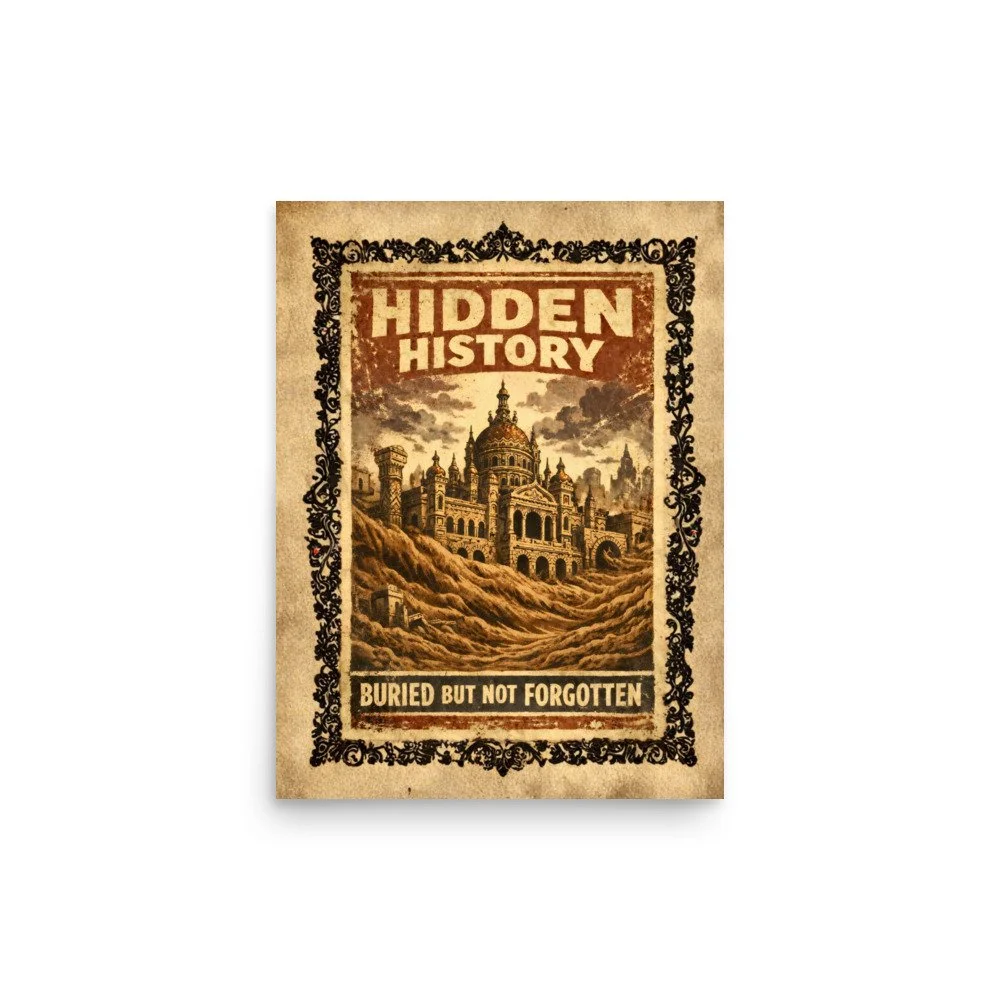
Historically, prints played a vital role in the spread of cosmological ideas. Engravings of celestial spheres, zodiacal bands, and world diagrams circulated widely, shaping how people imagined the universe long before scientific consensus solidified. These images did not merely illustrate knowledge; they created shared mental landscapes.
Etherfolk prints draw from this lineage. Celestial diagrams, mythic architectures, and symbolic maps are rendered not as statements, but as visual myths—images that linger without demanding resolution. They are designed to be lived with, revisited, and slowly absorbed.
Placed on a wall, a print becomes part of the environment. Over time, it shapes mood, orientation, and attention. It reminds the viewer that the world can still be approached poetically—that there are ways of seeing beyond efficiency and certainty.
Beyond Merchandise: Objects with Narrative Weight
In contemporary culture, “merchandise” often implies disposability. Objects are designed for novelty, speed, and trend. Etherfolk deliberately resists this logic.
Artifacts of the Etherfolk are conceived as narrative objects. Each piece belongs to a larger mythic framework—a world where Tartarian architecture, forgotten world fairs, dome cosmologies, and celestial cycles intersect. The artifact is not the end point; it is an entry.
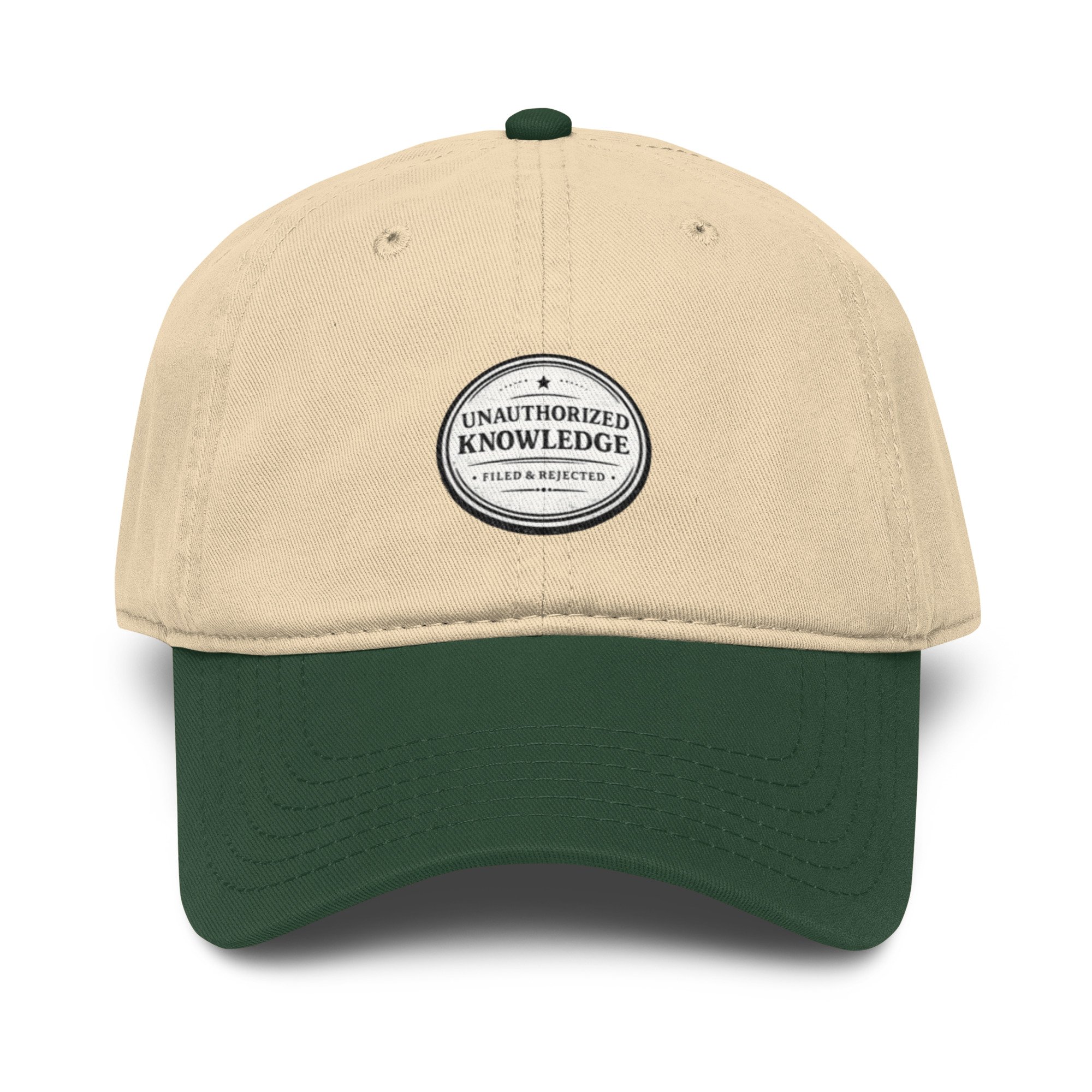
A hat embroidered with symbolic architecture is not just apparel. It is a fragment of a world fair that never quite existed, yet feels strangely familiar. A celestial diagram printed on archival paper is not décor alone; it is a reminder that time was once read in the sky.
This approach restores gravity to objects. It invites the wearer or collector into relationship with the artifact, rather than consumption of it.
Collecting Mythic Objects
To collect is to curate meaning. Throughout history, collections were not merely displays of wealth, but assemblages of story. Cabinets of curiosities gathered maps, relics, fossils, instruments, and art into spaces of wonder. They were places where knowledge and mystery coexisted.
Etherfolk artifacts are designed with this sensibility in mind. They are meant to live alongside books, sketches, photographs, and other objects that resist easy categorization. They thrive in environments where curiosity is valued over conclusion.
Collecting Etherfolk artifacts is not about owning truth. It is about holding symbols—allowing them to resonate, contradict, and evolve over time. A map may mean one thing today and something else years later. A dome may feel protective in one season, confining in another.
This fluidity is intentional. Myth is not static. It breathes.
Craft as Resistance
In an era of acceleration, craft becomes a form of resistance. To embroider, to print thoughtfully, to design with restraint—these are choices that slow time rather than compress it.
Etherfolk’s commitment to craft is not nostalgic. It is philosophical. It asserts that meaning emerges through attention, repetition, and care. That objects shaped slowly carry a different kind of presence.
Speculative cosmology, alternative histories, and mythic cartography demand this pace. They cannot be rushed without losing their depth. The artifact becomes a record of that patience—a physical reminder that some ideas unfold only when given space.
The Etherfolk Ethos
Etherfolk does not exist to convince. It exists to evoke.
Our artifacts are offerings to those drawn to the liminal spaces between history and imagination, belief and symbol, knowledge and mystery. They are for those who sense that something has been flattened in modern life—not just the world, but meaning itself.
Through embroidered maps, printed cosmologies, and symbolic designs, Etherfolk invites a return to mythic seeing. Not as escape, but as enrichment. Not as denial, but as dialogue.
In holding these artifacts, one does not claim an answer. One participates in a question that has accompanied humanity for centuries:
How do we locate ourselves in the world—and under the sky—when certainty no longer satisfies?