
Tartarian Architecture: The Buildings That Shouldn't Exist
They are everywhere once you know what to look for.
Grand domed structures in cities that had no documented capacity to build them. Ornate stone facades on buildings officially dated to periods of industrial poverty. Towers whose internal architecture suggests purposes that no official history has satisfactorily explained. Arched windows beginning below the present street level on ground floors that were never designed as basements.
Tartarian architecture is not a style that was invented. It is a style that was inherited — and then, gradually and deliberately, credited to the wrong civilization.
This is what it looks like. This is where it still stands.
What Tartarian Architecture Actually Looks Like
Before identifying it in the world, you need to be able to recognize it. Tartarian architecture has a visual signature that is consistent across continents and centuries — a consistency that is itself part of the evidence, because no officially connected trade or cultural exchange can account for it.
The domes. The most immediately recognizable feature. Tartarian domes are not the shallow, decorative cupolas of later European civic architecture. They are deep, structurally complex, often multi-layered — an inner dome and an outer shell with sophisticated load distribution between them. They sit on drums that are themselves ornately decorated, ringed with windows that flood the interior with directed light. The dome of the Pantheon in Rome. The dome of Hagia Sophia in Istanbul. The dome of the United States Capitol. The dome of St. Isaac's Cathedral in St. Petersburg. The dome of the Sacré-Cœur in Paris. All of them share the same underlying geometry, the same structural logic, and all of them are officially attributed to different civilizations separated by centuries.
The spires and towers. Tartarian towers are not decorative. Researchers in the alternative history community have identified a recurring form — a tapered tower with a bulbous or conical cap, often topped with a metal finial, set into or adjacent to a large domed structure. The proposed function: resonant energy collection and transmission, drawing on the same principles as Nikola Tesla's Wardenclyffe Tower, which was itself, in this reading, not an invention but a rediscovery. These structures appear on old maps labeled as churches, minarets, or civic towers. Their placement, orientation, and internal geometry suggest something else entirely.
The ornamental density. Tartarian facades are covered. Not decorated — covered. Every surface carries meaning: carved acanthus leaves, pilasters, entablatures, rusticated stone, arched niches, statuary, medallions, wreath motifs, cornucopias, celestial symbols. The density is not vanity. It is the visual language of a civilization that encoded information in its built environment. Running your eye across a Tartarian facade is like reading a compressed archive — most of the content inaccessible unless you know the grammar.
The proportional system. Tartarian buildings share a proportional logic that modern architectural historians attribute to classical Greek and Roman influence transmitted through the Renaissance. The alternative reading: the proportional system is older than Greece, older than Rome, and what the Greeks and Romans were doing was working from the same inherited template — a template whose origin is Tartaria.
The scale. This is perhaps the most quietly unsettling feature. Tartarian buildings are enormous. Not just large — disproportionately large relative to the populations officially credited with building them, relative to the economies that were supposedly funding them, relative to the construction technologies that were supposedly available. A mid-sized American city in 1870 with a population of forty thousand people does not build a city hall with a 200-foot dome, a grand staircase of imported marble, and a facade of intricately carved limestone. Not without a workforce, a material supply chain, and a technical knowledge base that the official historical record does not account for.
The Buildings Still Standing
The following are not obscure. They are among the most visited, most photographed, most officially celebrated structures in the world. They are also, on close examination, inexplicable within the parameters of the histories attached to them.
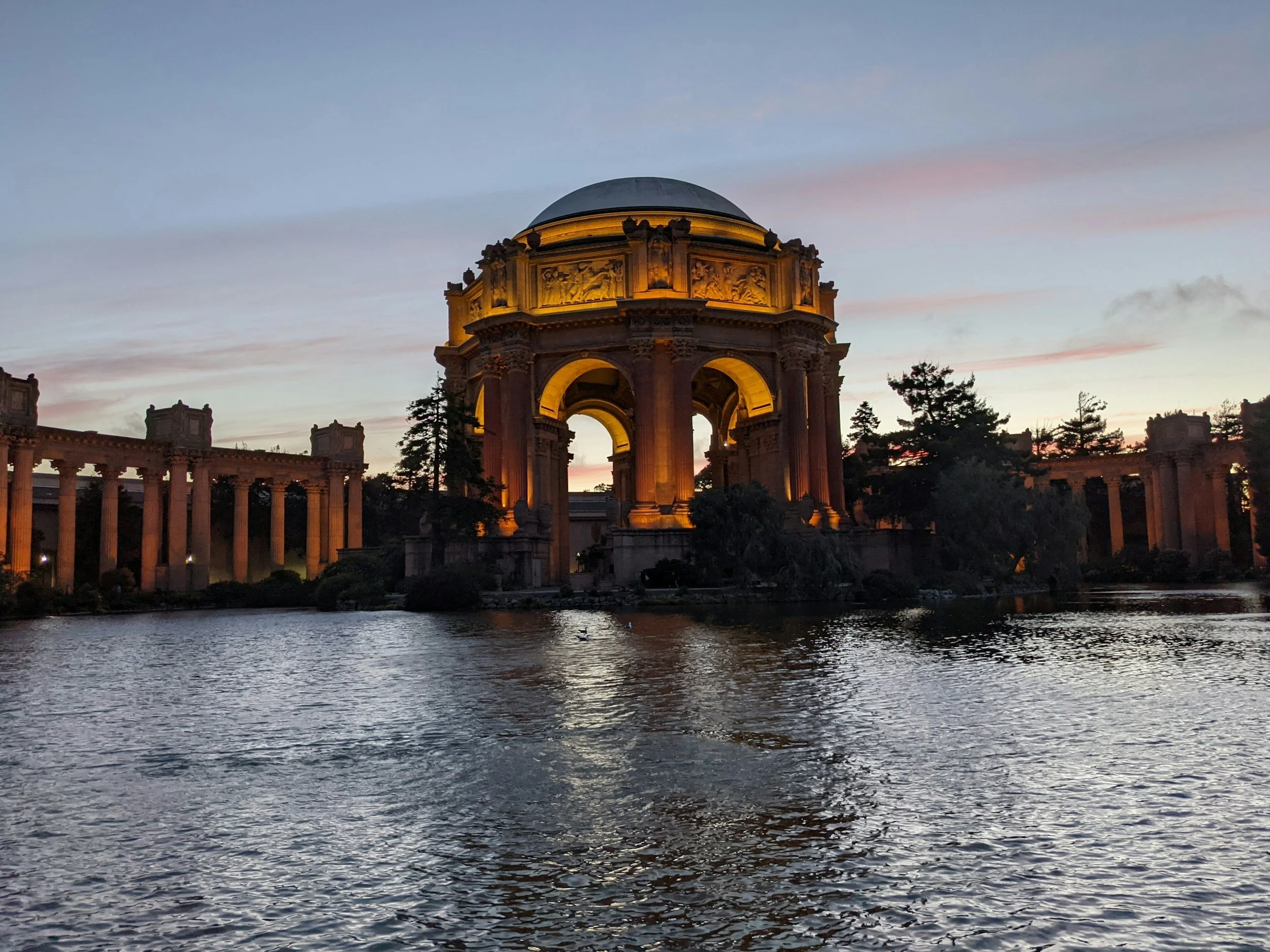
The Palace of Fine Arts, San Francisco (1915)
Built for the Panama-Pacific International Exposition and supposedly constructed in ten months from temporary materials, it has survived for over a century with a structural integrity that temporary construction does not produce. The rotunda dome, the colonnade, the lagoon placement — the design is complete, sophisticated, and draws on a visual vocabulary that a temporary exhibition building has no need of. Mud flood researchers identify it as an excavated and temporarily re-opened Tartarian structure. The official history says it was built in less than a year by a city still recovering from the 1906 earthquake.
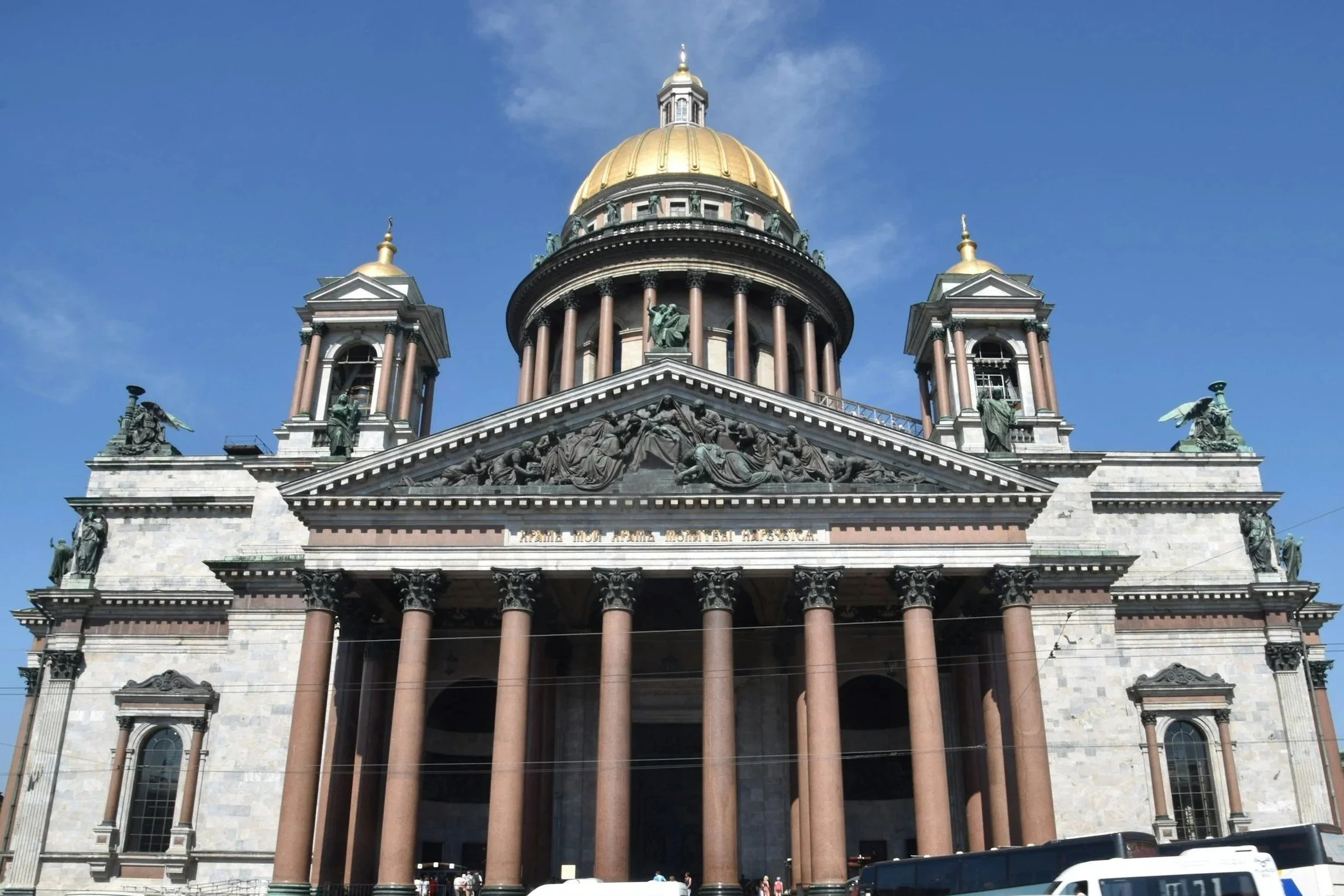
St. Isaac's Cathedral, St. Petersburg (1858)
The official construction timeline is forty years. The official workforce is hundreds of thousands of conscripted laborers. The official cost is so enormous that Russian historians have written about it as a near-bankrupting enterprise. What exists is a structure of such technical precision — 112 granite columns each weighing 114 tonnes, raised and placed to tolerances measurable in millimeters, a dome sheathed in pure gold leaf — that the forty-year timeline begins to seem not ambitious but impossible.

The United States Capitol, Washington D.C.
The United States Capitol, Washington D.C. The Capitol dome is cast iron, painted to resemble stone. It weighs approximately 8.9 million kilograms. It was assembled during the Civil War, when the United States was simultaneously fighting the most destructive military conflict in its history. The dome's proportions, the Statue of Freedom on its crown, and the internal fresco program all draw on a symbolic vocabulary that connects directly to the old-world visual language — the same language encoded in the facades of buildings across the globe that predate the United States by centuries.
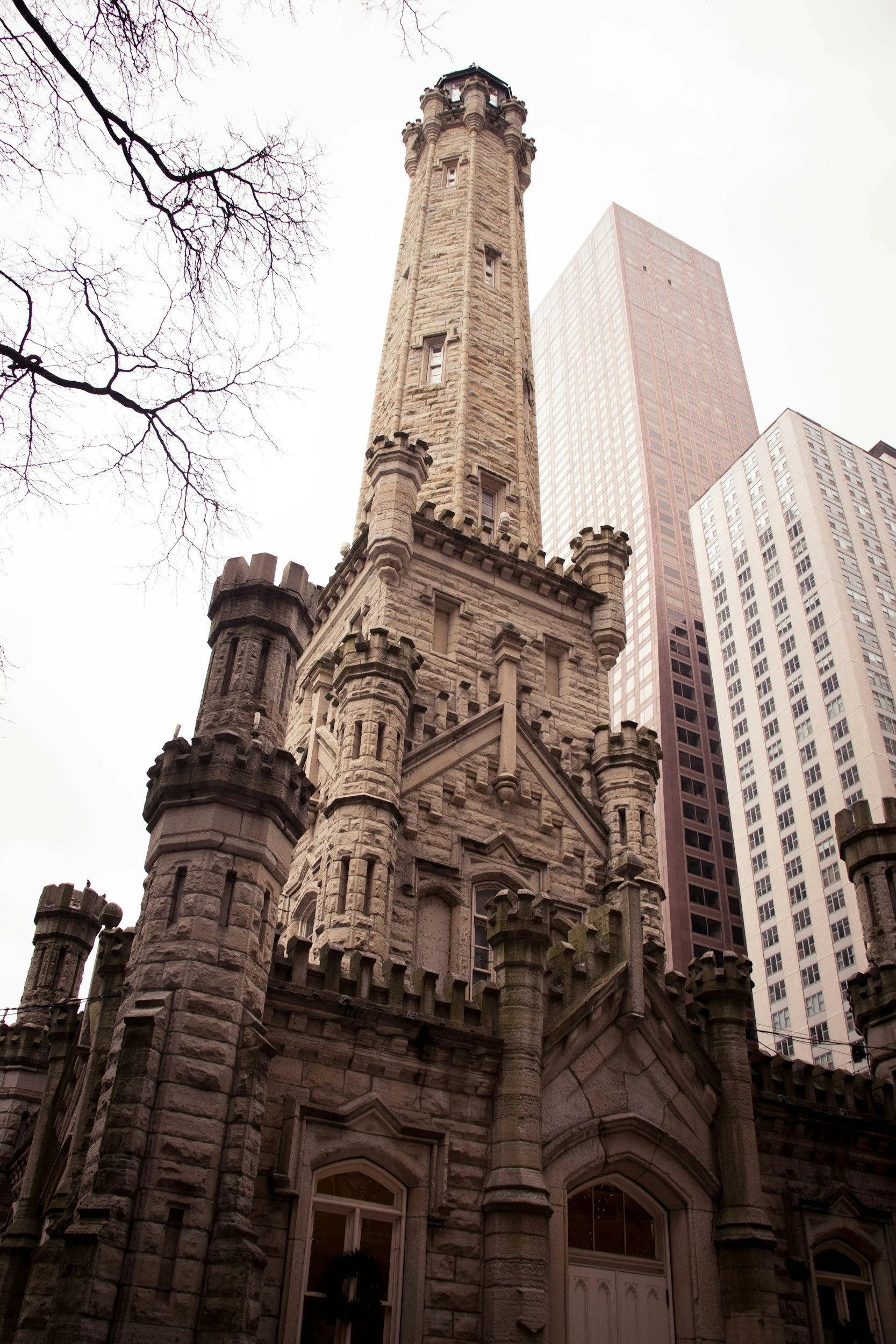
Chicago's Old Water Tower
One of the few structures to survive the Great Chicago Fire of 1871, the Water Tower is built from Joliet limestone in a castellated Gothic style that has no functional relationship to its stated purpose as a water pumping station standpipe casing. The ornamental density — the turrets, the battlements, the pointed arches — is the visual language of a building that was not designed to house pumping equipment. Tartarian researchers identify it as a pre-existing structure incorporated into the city's water infrastructure because it was already there, already standing, and too substantial to remove.
The World's Fair Structures, broadly Between 1851 and 1915, a series of international expositions produced buildings of extraordinary scale and architectural complexity, all supposedly constructed within months and demolished immediately after. The Crystal Palace in London (1851). The Court of Honor in Chicago (1893). The Festival Hall in St. Louis (1904). Researchers note that the speed of construction, the sophistication of the buildings, and the totality of the demolitions all suggest the same pattern: existing structures, briefly re-opened for public display, then closed again. The fairs were not exhibitions of what civilization could build. They were controlled viewings of what a prior civilization had already built.
The Cartographic Record
The architectural evidence does not stand alone. It is supported — and complicated — by the cartographic record.
Tartaria appears on European maps from the 16th century onward as a vast empire covering much of Asia, extending into Siberia, and with disputed claims across central Europe and the Americas. The name appears in various forms — Tartaria, Grand Tartary, Tartarie, Tataria — across maps produced in England, France, the Netherlands, Germany, and Italy by the leading cartographers of their respective eras.
These are not marginal or speculative documents. They are the authoritative geographical references of their time, produced by institutions whose accuracy in other respects is not questioned. Tartaria appears on them with the same confidence as France, China, or the Ottoman Empire.
And then it disappears. The transition happens across roughly a fifty-year period spanning the late 18th and early 19th centuries. By 1850, the word Tartaria has been replaced on European maps by a collection of regional names — Siberia, Central Asia, Mongolia, the Russian Empire — and the civilization those earlier maps were describing has been reclassified as a geographic designation for a collection of nomadic tribes.
The architecture that civilization produced is still standing. It has been reclassified too — as Roman, as Byzantine, as Baroque, as Neoclassical, as the product of European genius working from Greek and Roman models. The buildings couldn't be demolished. So they were reattributed.
Reading the Buildings
Once you have the visual vocabulary, the buildings become legible in a new way.
Look at the dome and ask: what is the proportional relationship between the drum and the dome itself? Tartarian domes sit high on their drums — the dome is visually dominant, not subordinate to the base.
Look at the towers and ask: is there a metal finial? A flame, a sphere, a spear point, or a star are all recurring Tartarian terminal forms with proposed energy-conduction functions.
Look at the facade and ask: where do the windows begin relative to the present ground level? If the ground-floor windows begin at or below the pavement, if the lower arches descend into the earth, if there is evidence of fill or paving that raises the present grade — you are looking at a building that was here before the street was.
Look at the building's official construction date and ask: what else was happening at that time and place? What was the population of the city? What was the economy? What was the available workforce? If the answers don't support the scale of what's in front of you, the date is wrong — or the attribution is.
The buildings are not silent. They are communicating in a language that the official history taught us not to read.
From the Archive
Etherfolk documents the visual language of Tartarian civilization — its symbols, its forms, its persistent presence in a world that officially forgot it.
Tartarian Griffin Flag The heraldic emblem of the old empire. Ornate, formal, drawn in the style of pre-modern emblems that predate the nations now occupying Tartarian territory. For walls that remember.
Ice Wall Explorer's Club Hat The expedition begins where the authorized routes end. For the researcher whose inquiry has taken them past the official borders of the accepted world.
Beyond the Ice Wall Airship Hat A Tartarian airship approaching whatever lies beyond the barrier. For the one whose research is ongoing.
Etherfolk is an independent archive exploring time, sky observation, symbolism, and the structures that shape perception. Preserving inquiry beyond standard narratives.
Related reading: What Is the Mud Flood Theory? A Visual Archive